

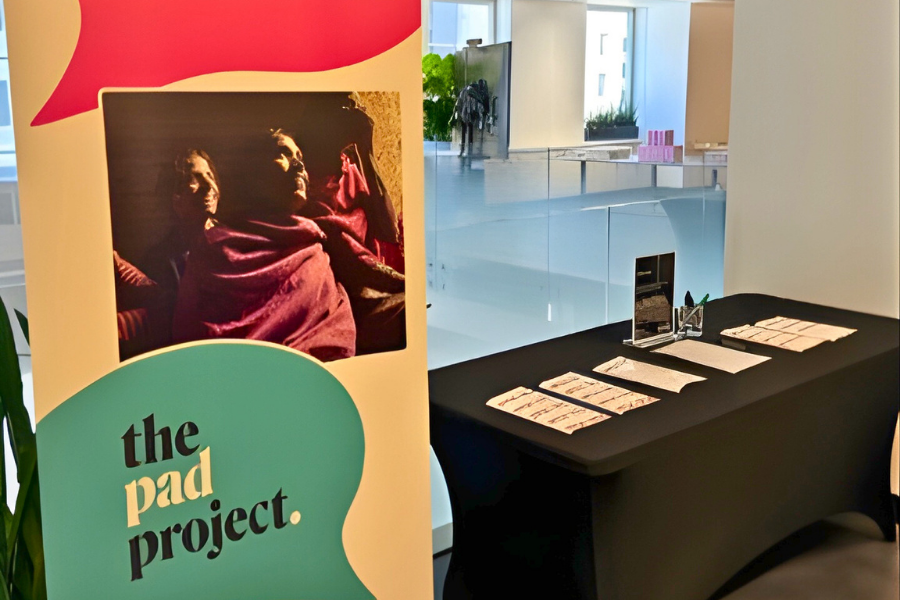
As young people are finding their voices in various global issues, junior Eleeza Wasef is proving that advocacy has no limit. By morning, she is swamped with the rigorous coursework that Advanced Placement Biology has to offer. By night, she is an ambassador for The Pad Project—a global non-profit aiming to promote menstrual equity and reproductive education.
As a part of her responsibility as an ambassador, Wasef is required to host a watch party for an award-winning documentary named Period. End of Sentence. This film portrays a group of women in India combatting a lack of access to menstrual supplies by creating a low-cost sanitary napkin machine. Previously, the lack of menstrual resources caused girls. According to the documentary, menstruation is a prohibited topic of discussion in many countries because of things such as religion or customs, making it difficult to create progress.
“I was really surprised when watching the documentary that girls had to drop out of school, just because they started their periods,” junior Shree Patel said. “However, towards the end [of the film], I was inspired that the whole community came together to create a solution and I am really proud of [Wasef] for getting involved with this non-profit.”
The documentary stated that The Pad Project began with a simple but powerful message: “a period should end a sentence, not a girl’s education.” The Pad Project operates across more than 40 countries, partnering with local organizations to increase access to menstrual hygiene products as well as supply education on the topic. Their work ranges from installing pad-making machines in various places to promoting washable pad programs. By combining education with substantial resources, the group gives people the ability to take ownership of their reproductive health.
“The overall goal is to expand menstrual and reproductive education worldwide,” Wasef said. “Additionally, I don’t want women to compromise their [lives] and dreams because of their periods.”
According to Wasef, being an ambassador means more than just raising awareness. It is about changing society’s views on the topic while helping young girls feel comfortable sharing their experiences with important figures in their lives. On a day-to-day basis, her time is spent organizing donation drives for menstrual products and getting more people involved in the movement.
“Platforms such as social media normalize open discussions about menstrual health and highlight how the period stigma affects educational opportunities,” Wasef said.
Despite her busy schedule, Wasef manages to balance the work she does for the non-profit with school responsibilities as well as her personal life. According to Wasef, junior year is a crucial part of high school, especially because it is a time when most students begin to think about college along with potential careers they would like to pursue.
“I’ve already started touring colleges. The whole process of planning my future while managing everything else going on in my life can be stressful at times,” Wasef said. “Time management is crucial, especially at this age, so I make sure that I have time in my schedule for my academics and volunteer work. I also like to have time to prioritize self-care.”
Although there is stress that comes with balancing school and other priorities, her ability to manage it stems from a purpose of knowing that the work she does as an ambassador is helping women all around the world.
“It makes me very happy realizing that a girl halfway across the world can stay in school because she has access to menstrual products and that motivates me to keep going,” Wasef said.
On top of conducting activities as an ambassador, Wasef mentions that being a part of the non-profit has taught her many things surrounding menstrual equity and reproductive education.
“What surprised me the most was how little people knew about periods in some places,” Wasef said. “I knew there was a stigma, but I didn’t realize how severe it could be. Some villages don’t even know what a pad is.”
The Pad Project’s message stands out because it focuses on sustainable, community-led change. In addition, new employment opportunities have formed for women from the creation of pad-making businesses.
“I feel so privileged to be able to have access to feminine products and have friends as well as family members who are there to help me,” junior Hansika Degasakala said. “After attending [Wasef’s] watch party, I was more aware of the problems surrounding women’s menstruation cycles and I’m glad there is a movement supporting it.”
Wasef’s work as an ambassador has made her more vocal and aware of the problems women have to face, and through her work, she hopes to inspire others to join the movement.
“My dream is that period poverty becomes something people work to end everywhere,” Wasef said. “Feminine products are a right, not a privilege. By joining this movement, I feel that I have helped the community raise awareness about the subject.”
