

When rhetoric becomes reality
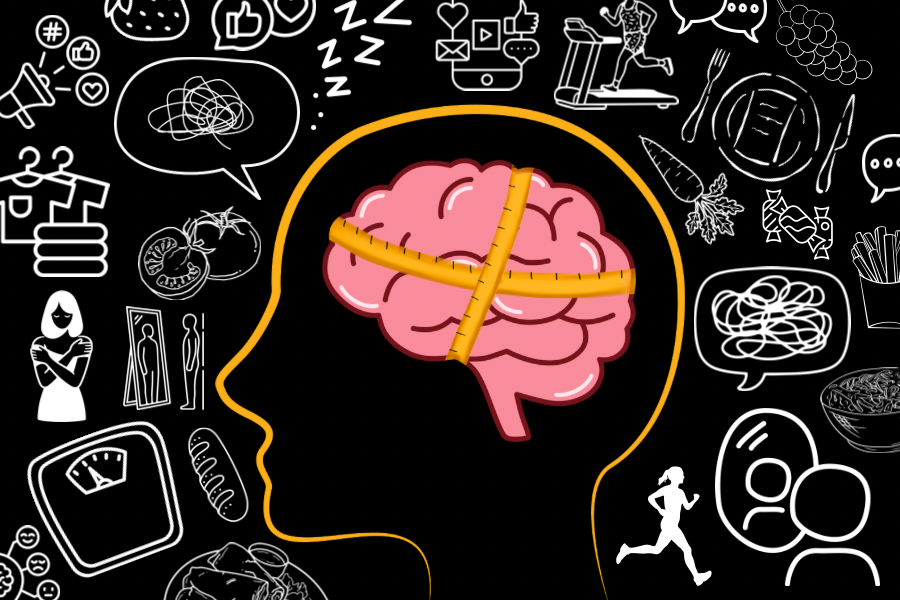

While the average student is naturally plagued by insecurities due to rapid brain development and hormonal shifts, those who participate in sports are even more likely to experience a warped perception of self. Between 77%-80% of athletes in weight-dependent sports report using compensatory behaviors, or behaviors such as vomiting or fasting, according to the National Association of Anorexia Nervosa and Associated Disorders. Even at WA, these habits can become normalized as routine.
According to student wrestlers Sacha and Ash, their sport is highly weight-focused. The premise of their competitions are reliant on meeting a certain weight class. While the athletes are never asked to cut or gain weight, an invisible pressure develops as they become more competitive. Oftentimes, missing the benchmark for a weight class could result in the inability to compete, the changing of weight classes to a more difficult pairing, or other wrestlers having to adjust who they will be competing against.
“For anyone that joins the sport, they’re not expected to cut weight or gain weight. But if you reach a certain point—like if you’re a junior or senior and you’re [on] varsity—it’s more expected that you be mindful of your weight and that you’re on weight […],” Sacha said. “Because if you don’t cut down to the weight class, you’re not going to be [competing].”
Ideally, wrestlers would be able to cut down weight over a longer period of time, but it can be difficult to regulate on such an exact scale, with Ash citing many instances where teammates would have to cut at the last minute. Both athletes mentioned various cutting methods that wrestlers resort to in these situations, including epsom salt baths—which flush the body of all water weight—, aggressive workouts while wearing multiple layers of clothing, eating ice in replacement of a meal, and self-induced vomiting. While some of these habits can prove inconsequential alone, it’s incredibly easy to fall into a cycle of weight-watching that quickly becomes dangerous.
“When wrestling season ends and you’re out of season, you’ve spent pretty much the past three months checking your weight and worrying about your weight,” Ash said. “So when you do eventually have the freedom of eating whatever you want, I feel like there’s still a part of your mind that’s stuck on your weight. And I feel like that can be very mentally challenging for people.”
All competing wrestlers are required to receive a weight certification at the beginning of the season. This test assesses an individual’s body fat to determine the minimum weight at which they can safely participate. However, according to Ash, many athletes will attempt to cut their weight ahead of this test to be able to go down to a lower weight class in the future.
“Everyone during wrestling season is drained, especially with the amount of cardio that you’re doing and that you’re not eating what you’re supposed to,” Ash said. “When you’re a wrestler and essentially you can’t eat, or you’re limited to the amount of food that you can eat, then you’re not getting the full nutrients that you’re supposed to, so it affects the way that you feel.”
One study conducted by Appalachian State University professor K.S. Fasczewski even claims that wrestling is one of the sports with the highest risk for eating disorders, with 53.9% of respondents exhibiting at least one disordered-eating behavior. Although wrestling is structurally centered around weight, this is not innately the issue. Rather, it’s continuing standards for young athletes that convince them that by not making weight they are “weak” or “incapable.” This language ultimately can be just as detrimental as any weight-loss process, and is what has become so ingrained in gym culture.
“When someone is pushed around by someone bigger, [a lot of the soccer and some football players] will yell out ‘weight room’, to tell them to bulk up,” Sacha said. “I know a few people who started to go to the gym to get bigger because of not wanting to get thrown around as much.”
Gymnastics is another example of an innately weight-focused sport that can prove impressionable on young athletes. Student gymnast Martha attests to the potential for toxicity within the sport, citing the sport’s history of starvation. Between emaciated figures that exist as role models and physically-exposing leotard uniforms, nearly half of all “aesthetic athletes” such as gymnasts suffer from clinical eating disorders.
“The whole sport is about being judged. You do a routine and then you’re judged,” Martha said. “And obviously it’s about your skills, but you’re also so exposed in gymnastics, and I think it can be uncomfortable. I think you’re just constantly comparing [yourself to] the people around you.”
According to Martha, toxic conversations are also normalized within the sport, ultimately facilitating a harmful culture around malnutrition. She recalls stories of girls making negative comments about their own bodies in the bathroom and passing out in the shower after not eating for three days. These types of behaviors show the major impact simple dialogue can have in the realm of sports, urging us to reflect on how our passive thoughts are impacting others.
“I think [body image] is just always back in everyone’s mind,” Martha said. “But it’s fascinating. No one is happy with their body, whether it can do good skills or not. And it’s sad, like what I hear in the bathroom is awful.”
While Martha mentions that there are many gymnasts at her gym who have had eating disorders, she has also struggled with her own. Between participating in multiple sports, receiving her driver’s license, and switching to a very healthy diet, her heart rate became concerningly low, with Martha not realizing what was happening until later on.
“It’s hard. Once you get in any unhealthy relationship with food or working out, it’s hard to ever forget […],” Martha said. “You become so obsessed with what your body looks like. […] You see progress, and you want to keep going. And when you see progress the other way, it stings a little bit.”
After receiving help from a therapist and nutritionist, Martha has been able to readjust to a healthy balance between exercise and food. But this recovery did not come without its challenges.
“I had [to be told] what I was eating at what time every day, and I just had to follow that all summer. And that’s just what you have to do,” Martha said. “It might be uncomfortable, but then eventually your body adjusts and you realize ‘I can still do what I want to do in my sport and eat like this.’”
Although athletes struggling with disordered eating often feel that cutting meals and overworking their body will improve their performance, more often than not, these behaviors prove to be detrimental to their physical and mental wellbeing. In the moment, the next meet, game, or practice can feel like the biggest deal in the world. But we are people first, athletes second, and you need to nourish your body to sustain a healthy life.
“I am someone who lives for moving my body and my sports. It is crazy how I thought eating really healthy foods [alone] was going to help me perform better, but it actually resulted in me being completely pulled from all physical activity. So many people in sports and online preach eating healthy foods, but I don’t think a lot of them realize how far someone can take that […],” Martha said. “Food is fuel. I think it is important (especially in athletes) to understand that food is fuel. Everything in moderation. Any restriction is an unhealthy mindset even if people don’t want to admit it.”
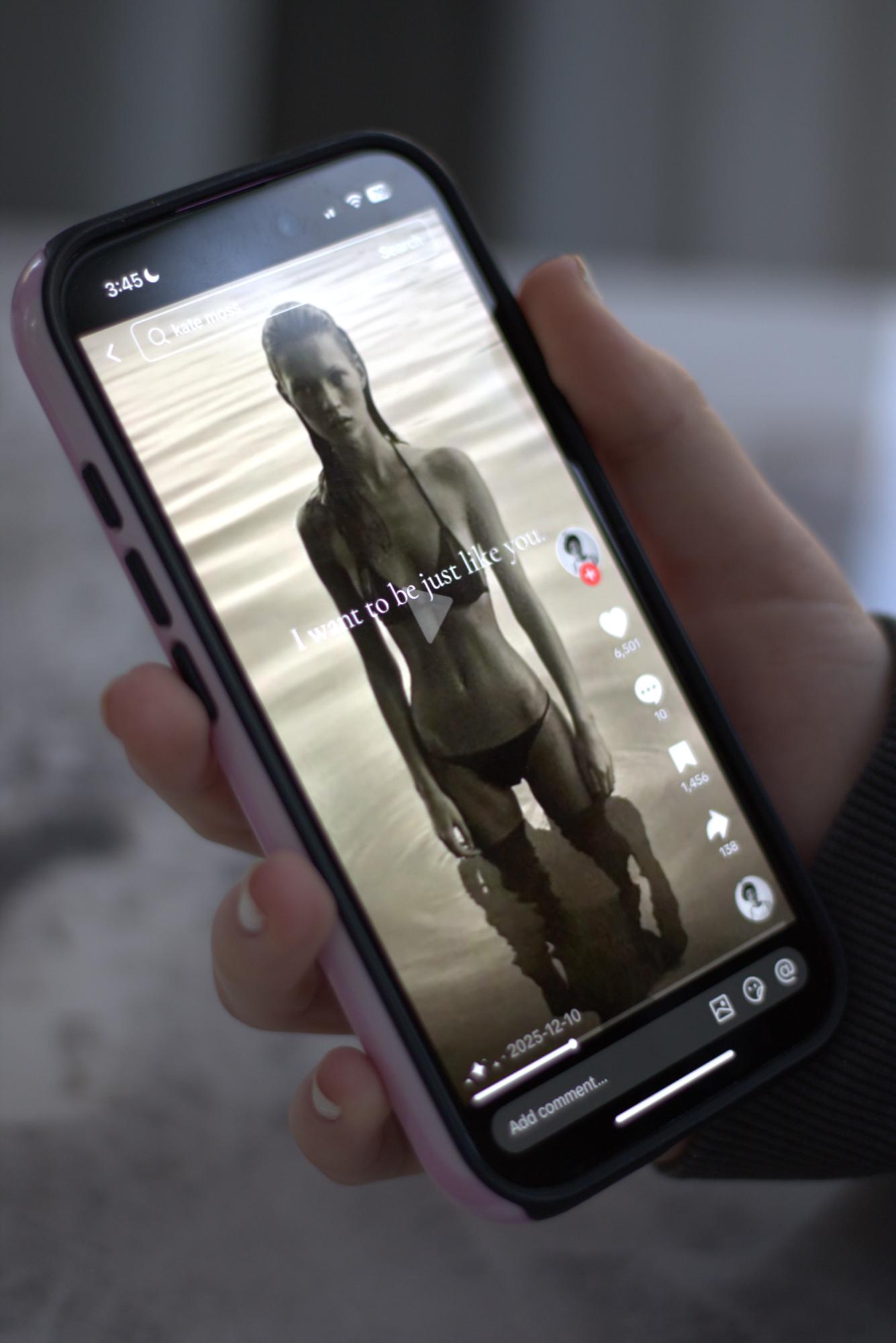
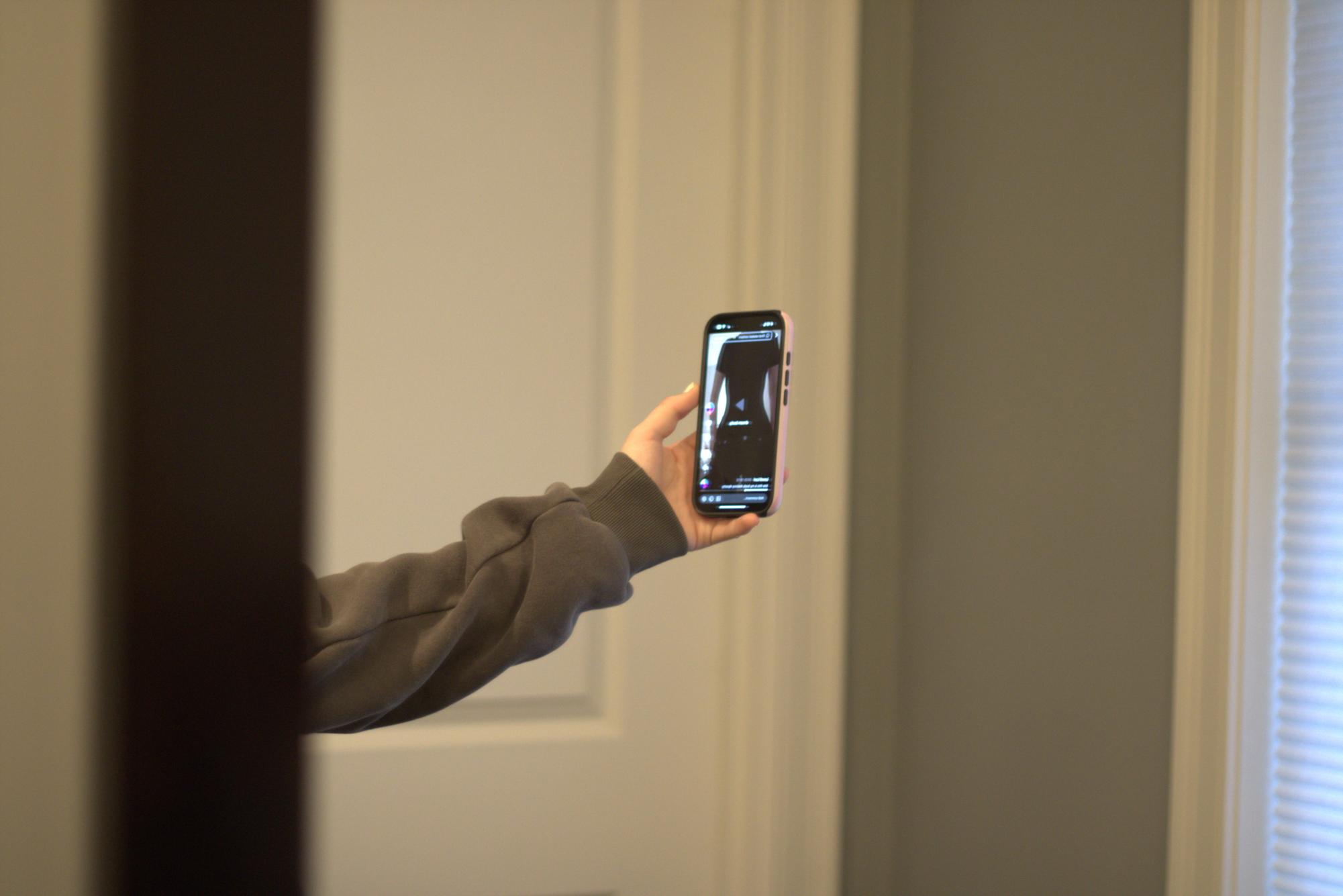
More universal than sports is access to social media which furthers unrealistic expectations centering around body image. Automated scrolling platforms like Instagram and TikTok expose users to altered images, toxic behaviors, and unsupported theories that leave lasting impressions on teenagers.
One study conducted by Case24 found that 71% of individuals utilize editing platforms like FaceTune to alter their images and videos before posting on Instagram. Though that number is disturbingly high, it’s incredibly rare that refined images are advertised as such. For young and impressionable users, this false narrative of the “perfect” body type can ultimately lead to an increased body dissatisfaction.
“Gym culture is really toxic. Especially if you scroll on Instagram all the time [and] you’re on that gym side of TikTok, you see all these big figures and people who are on steroids and who use different camera angles to make themselves appear bigger,” Ash said. “And then you look in the mirror and you’re like, ‘why don’t I look like that?’ But essentially, you’re just an 18 year old kid who isn’t supposed to be that big anyway.”
The thrill of mindlessly scrolling shouldn’t come at the cost of self image. The problem is that the perpetrator in this situation is also the victim. Everyone is striving to cultivate a perfect profile of themselves—one where their body matches every fleeting trend that becomes popular. But by projecting unrealistic achievements onto the internet, countless other adolescents are internalizing these standards and developing a sense of disordered self image because of them.
Social media also enables users to easily spread disgusting slang. “Butter face” is a phrase used to describe women whose face is the only non-attractive part about her body. Meanwhile “big back” and “dad bod” serve as modern ways to call people overweight or untoned, furthering fatphobic stereotypes.
I’ve heard these terms thrown around in the cafeteria, in hallway conversations, and online. Frankly, it’s sickening how we use trending phrases to conceal blatant cruelty. Even if intended as a joke, you never know what other people are going through. Your words could be someone’s tipping point, so it’s important to stop feeding into immature media.
“Social media has completely ruined everyone’s perception of what is healthy,” Martha said.
Student Molly has recovered from her eating disorder and dueling body dysmorphia, but also mentions social media as one of the main contributors to her struggles.
“I started struggling primarily after I got TikTok in sixth grade for my birthday. I was very excited,” Molly said. “However, about a month or two into using that app, I felt like I was definitely exposed to a lot of harmful information around body positivity, nutrition, a lot of false facts, and everything. And I kind of fell victim to that, and that started to affect me mentally.”
Even in situations where influencers naturally meet certain body standards, endlessly scrolling through comments praising their appearance can often induce comparison within oneself. In Cybersmile’s 2023 Comparison Culture Survey, 90% of respondents, ages 16 to 24, reported a sense of negative self-image.
“I was seeing these really unnatural bodies [and] things about food on the internet, and I started to compare myself a lot with those people,” Molly said. “And as it just progressed, comparison became a really big issue. That was where a lot of my [negative] thoughts would begin.”
Just like in sports, people may be too quick to blame the platform. And while its features definitely contribute to the perpetuation of unrealistic standards, the real perpetrators are the people behind the posts. It’s crucial we reassess our perspective on truth before spreading it on the internet, especially when these “truths” can impact the way others see themselves. Language shapes the way we see the world. By feeding into these posts, we are continuing a false narrative of what is “perfect.”

Eating disorders are rarely derived from a single source, but rather are the sum of various biological and environmental factors. Regardless of how “adult-like” they appear, these diagnoses could happen to anyone.
After her early symptoms started in sixth grade, Molly’s dysmorphia developed into a disorder, and by seventh grade, she was sent to a residential treatment facility. Meanwhile, student Sadie witnessed her friend go through a similar battle as she visited her in rehab homes over the course of two years. Both struggled to reconcile with the harsh reality of how eating disorders can impact a network of people.
“I don’t think that anybody really noticed for a very long time until it started to less affect me mentally and then started [impacting me physically],” Molly said. “Because after you have all these thoughts, after it starts to take control of what you’re deciding to do, what you’re deciding to eat, how you’re exercising, […] you [get] in a loop.”
A recent study conducted by the European Pediatric Association shows that eating disorders have increased by 40% in the six- to 18-year-old population since the pandemic, demonstrating the ever expanding reach of mental illness. However, in spite of how common these symptoms are, they’re often categorized as normal teen behavior, and thus swept under the rug.
“I feel like it’s really common to hear girls talking badly about themselves or their body or about food,” Sadie said. “But when you go to a place where people’s health is literally suffering [because of this], it makes it seem like a lot bigger of a deal in your mind.”
Yet it’s oftentimes internalized rhetoric that can result in the most damage. While Molly cites constant rhetoric of “compliments” and comments on portion sizes as a detrimental factor to her diagnosis, her internal dialogue proved just as hurtful.
“My mirror was like my greatest enemy and greatest friend, because the body dysmorphia really made me see something different every day,” Molly said. “And I thought that one piece of food was gonna change how I physically looked, because that’s what my eyes were seeing, but that’s just [not] right.”
It’s now normalized to skip meals before big dances, to eat sparse meals, and to achieve adult bodies as teenagers. But what is truly achieved by perpetuating these standards?
No child should be subjected to terms like “ugly” or “pig,” just as we shouldn’t subject ourselves to such harassment.
“I did a lot of reflection therapy, [and] just working to love myself no matter how I look. Trying to think of the bigger picture like in the end, does it really matter? What does it really matter what you will look like in your casket? It doesn’t matter,” Molly said. “It matters how much you lived, and with an eating disorder controlling your life, you can’t live the life you want because you’re just trapped.”
The harsh truth is that you never truly know if someone is at their healthiest or lowest point, and you don’t know if a compliment is just endorsing a disordered body. Our language is constantly changing and often subconscious, but it’s crucial we take steps to be more mindful about what we say and why we say it.
“I was very surprised by the whole thing. My friend was really good at hiding it, and I didn’t realize [her eating disorder] until it got to a certain point, and I felt very guilty that I hadn’t noticed,” Sadie said. “It’s just really stressful to watch someone you love have to fight that.”
You never think it’s a problem until it is. You never realize its severity until it’s too late. And you never understand the impact of your words until you yourself have been impacted. Mental illnesses are too often dismissed for their lack of physical manifestation, but with eating disorders holding the highest mortality rate of any mental disorder, we desperately need to reassess our vocabulary before it’s too late.