

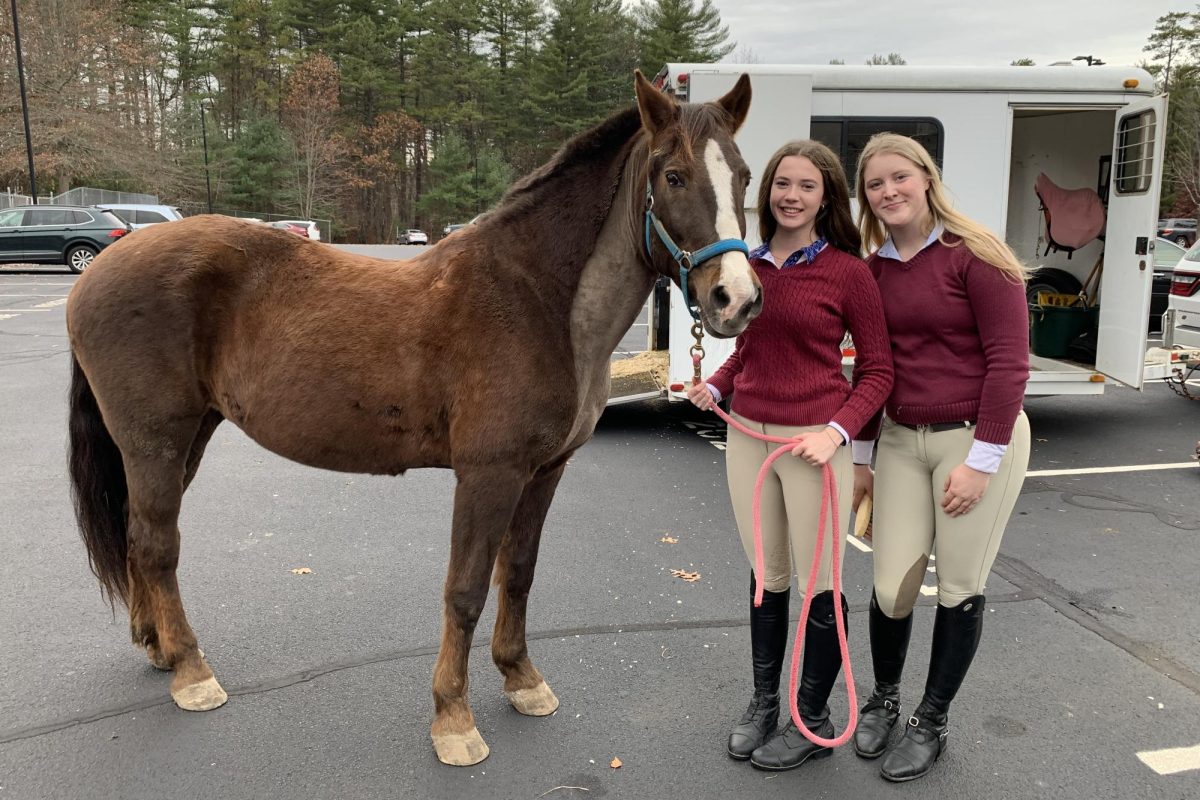
A gentle silence settles over Westford Academy’s senior parking lot as the frenzy of students rushing home after the last bell slows to a stop. A few remaining cars from the student drop-off line drift by, signaling the end of the school day. The only thing setting this day apart from any other afternoon is the group of students gathering to watch two horses strut up to the entrance of Westford Academy.
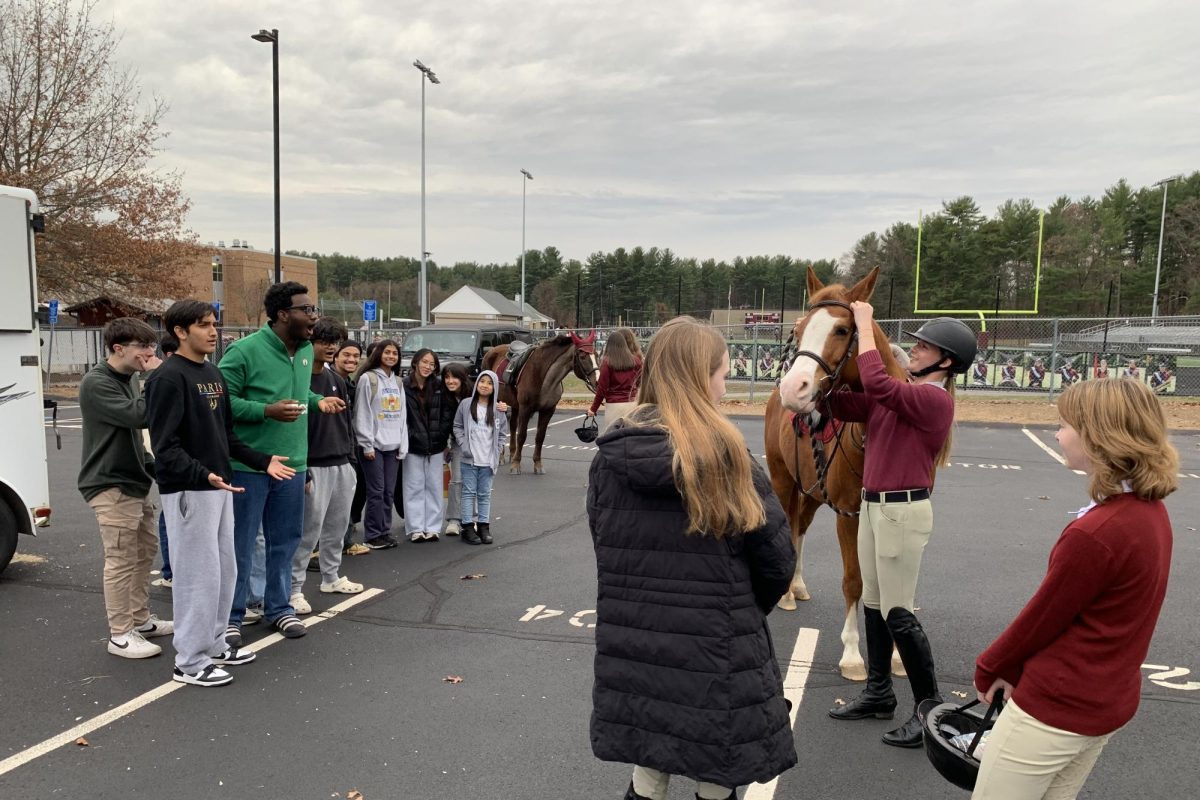
The Westford Academy Equestrian Team brought two of their riders’ horses to campus on Tuesday, Nov. 25 for the team’s yearbook photo. All WA students were invited by coach Callie Borden to meet the horses while they were being groomed in the senior parking lot.
Although the horses were included in the team photo last year, this was the first year that Borden welcomed the entire student body to spend time interacting with the animals. According to Borden and multiple riders, through their inclusion of non-riders, the team hopes to generate more awareness of WA’s equestrian community.
“Our team is a little small, so we’re hoping that year after year, we’re able to get at least a couple [of] new members,” Borden said. “Maybe there’s some riders out in the school that we don’t know about, and once they see us on campus, they’ll know that we exist, and they’re able to join.”
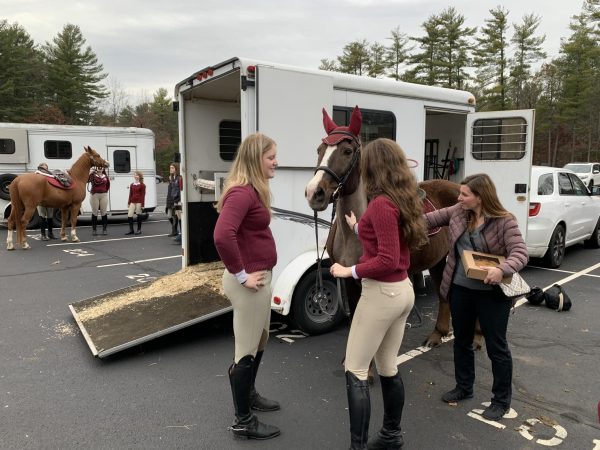
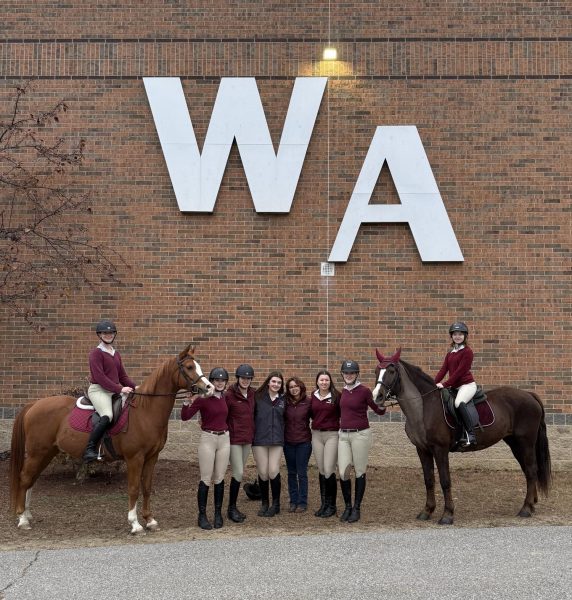
As they are key members of the sport, all of the riders also felt that it was important to include representation for their hooved partners in the picture. Senior captain Lizzie Tripp explained that having the horses present, while keeping WA in the backdrop of their yearbook photo, further legitimizes the equestrian team and cements their place in the school’s athletic community.
“We have a pretty small team, and we want more members, so I think the more that our team can be taken seriously, the more we can grow the team,” Tripp said.
However, their work goes beyond the Westford community. As one of the only high school horseback-riding teams in Massachusetts, the WA Equestrian Team has worked to increase student interest by leading the push for a wider acknowledgement of the sport. One way in which the team bolsters visibility for the sport at the high school level is by competing in a variety of events throughout the year, including a national competition that takes place in May.
In addition to legitimizing the team, Borden was inspired to share news of the event by the hectic holiday season. The stress surrounding this time of year can seem inescapable, but her knowledge of the mental health benefits of animals spurred her to turn the arrival of the horses into an impromptu animal therapy session.
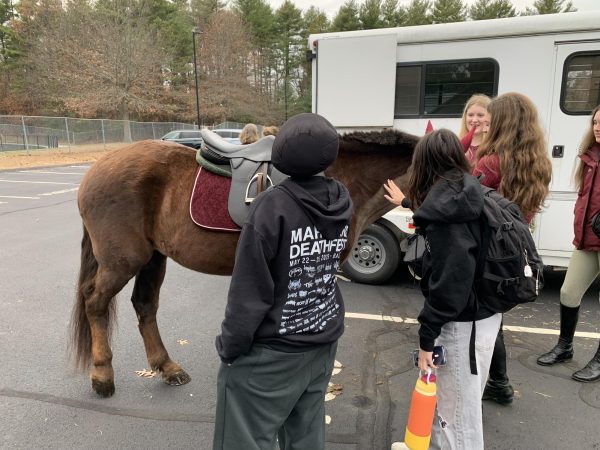
“Horses are always a stress reliever, so it’s nice around the holidays, when things are starting to ramp up towards midterms, […] for students to be able to get that stress relief, like giving a pet to the horse or two,” Borden said.
Multiple members of the team can attest to the benefits of spending time in the stables. According to Tripp, her 14 years of horseback riding have provided her with firsthand experience of the calming effects of the animals.
“I think I can speak for everyone who rides horses when I say the barn is our happy place,” Tripp said. “Horses really are the best therapy if you’re sad. Whenever I go to the barn stressed or unhappy about something, I always come home feeling better, partly because it’s a great way to spend some time offline and outside and then also because horses are such sweet animals who genuinely seem happy to see you.”
The emergence of more equine therapy and therapeutic riding programs in recent years is evidence of their soothing abilities, and the unique connections horses are able to form with humans play a large role in their effectiveness.
“I think all students would definitely benefit from interacting with animals, especially horses. Horses actually sense and react to human emotions,” Tripp said. “They observe physical cues like posture, breathing, and facial expressions. So if you are calm, they are calm, and if you are uneasy, they can actually feel that. They are nonjudgmental animals that form really strong partnerships with humans.”
The process of transporting the horses to WA and arranging to have them on campus was fairly straightforward, largely due to the willingness of WA’s administration. According to Borden, the idea was authorized by Dean Betsy Murphy whose enthusiastic support stems from her positive experiences with the mental health benefits of animal interactions.
“Plenty of studies show that pet therapy is very effective. It’s a relaxing way to interact with another [living thing],” Murphy said.
Murphy has been one of the biggest supporters of the equestrian team’s push for exposure, even riding last year’s horse, Waffles, when the team was taking their photo.
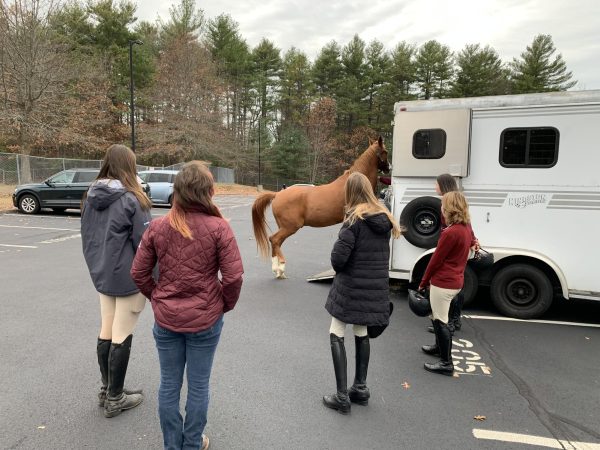
This year, the horses arrived just before 3 p.m. with their trailers parked in the senior parking lot, near the Trustees Field.
When the cars initially arrived with the horse trailers hooked to their bumpers, only a small group, primarily made up of equestrian team members, waited in anticipation to see the horses emerge from their stables. However, as the riders began brushing and saddling the horses, a large group of students gathered to eagerly watch Genna, Tripp’s horse, and Chesney, senior Erin Cassidy’s horse, calmly explore the nearby parking spaces.
“I was like, ‘wow, this is such a great creature,’” senior Kojo AsieduOtibu said. “It’s kind of like a dog. It’s not a human being, but it’s something with its own perception, and it’s just so interesting.”
After being brushed and saddled, the horses were led up to the WA building, where the team took their photo below the “WA” letters near the picnic tables.
Expanding awareness of the equestrian team has been an ongoing project for this year’s seniors. With many of them growing up around horses and joining the program before they entered high school, they have been able to watch both the team and their skills grow.
“The team has really been a second family to me throughout high school, and we are hoping to get more people interested, especially since we have four seniors graduating this year,” Tripp said.
Tripp, senior captain Catherine Newark, and Borden welcomed any student to join the team, regardless of experience. While horseback riding is a difficult activity to master, becoming a member of the team is an accessible way to gain more experience and receive more opportunities to compete.
According to Newark, many of the barns that host competitions provide their own horses for the riders to use to mitigate advantages and make competing more affordable. As a result, costs drop significantly, going from over $2,000 to less than $100 in one competition.
Even if students are not interested in riding, the equestrian program at WA is both a club and a team, so members can compete in events or simply spend time learning about and discussing equestrianism.
As they near the end of their high school riding careers, the seniors have helped the team reach the most participants in its history, but they still want to encourage students to enter the world of horseback riding and continue to ensure the team’s success.
“I hope that the equestrian team continues to recruit more and more people, no matter their riding experience,” Newark said. “This year we have the most kids showing that we have ever had. I also wish that we could find a home barn and even possibly get some school funding.”
