

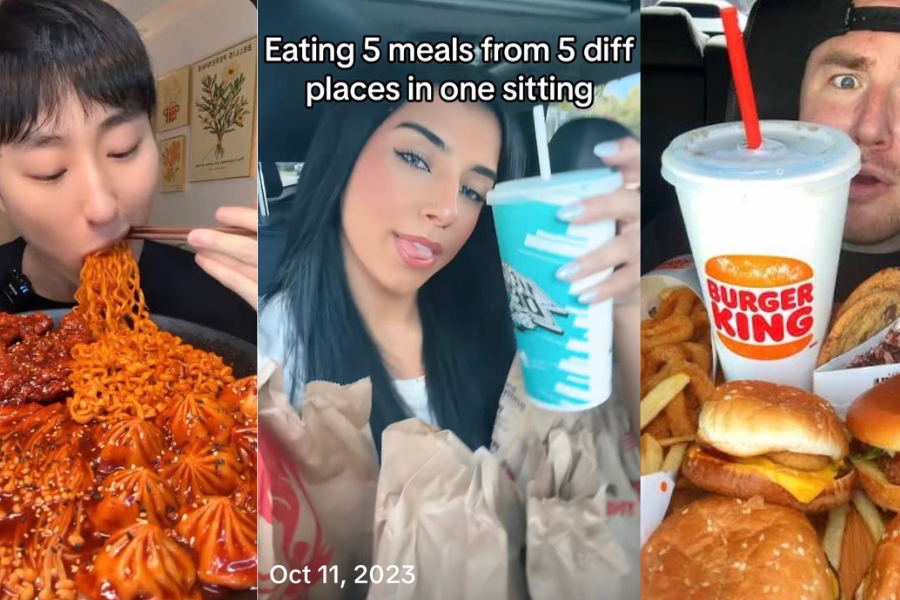
As soon as you open TikTok, your eyes skim over the first video that lands on your screen. The camera zooms in, the creator smiles, and within seconds, an entire table of pizza, tacos, and cheeseburgers is eaten. By the end, feelings of fascination, amusement, and comfort strangely wash over your overstimulated brain. However, behind the spectacle of these mukbangs lies a troubling truth that is often hidden beneath the crystal clear sound of slurps and crunches: people in our society, especially teenagers, have become disturbingly comfortable with viewing binge-eating as entertainment.
First emerging in South Korea during the 2010s, mukbangs began when content creators started live-streaming themselves eating to imitate their communal culture of sharing a meal. The popularity of the video format was associated with feelings of loneliness that had started to rise due to more single-person households being built because of the urbanization of South Korea. In the beginning, mukbangs were a tool for many socially-deprived citizens to fulfill their need for social interaction by chatting with the creator live-streaming to foster a sense of connection in their lives. However, this trend snowballed as mukbangs gained more attention due to exposure from the internet.
Mukbangs, although very controversial, are not inherently evil. This genre of social media has proven to be an outlet for people to display different cuisines and cultures that may not receive as much recognition. It can also prove to be a tool for people who are looking to satisfy unhealthy cravings, cure boredom, and alleviate loneliness. However, the mainstream version of mukbangs that are most commonly posted online strip the content down to a vehicle used to get the most amount of likes, follows, and money as possible.
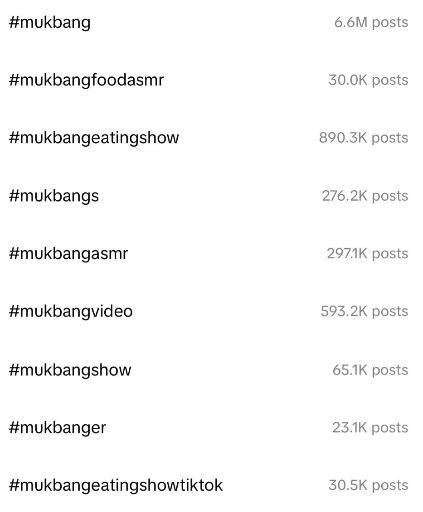
With this type of content exploding in popularity, more and more people saw an opportunity for attention, resulting in thousands of mukbang channels and accounts popping up on streaming platforms such as Youtube, Tiktok, and Instagram. Because of this, the true inspiration for creating these videos, which was to build connection, was lost and replaced by greed. From that point, mukbang content has continued to take a downward spiral that it has never been able to fully overcome.
As more people pursued this opportunity to go viral, more competition loomed over the content creation space. To draw attention to their videos, influencers used the “go big or go home” mentality. This sentiment was on full display as creators featured new content with even bigger portion sizes, buckets of condiments, and over-the-top production to garner the most amount of clicks possible. Not only is the sight of huge portion sizes stress-inducing, but it also fuels competition between creators by pushing them to outdo each other by breaking the record for eating towers of food in the least amount of time.
This also poses physical health concerns for the mukbangers themselves, as overeating can cause heart disease, excessive weight gain, type 2 diabetes, and gallbladder diseases. If this content is in high demand, creators will keep putting themselves in these dangerous positions to maintain the fame-filled lifestyle that they have become accustomed to, which is very concerning since these creators are willing to put their lives at risk for more money in their pockets.
On the opposite end of the spectrum, multiple controversies have arisen over the food waste aspect of mukbang channels due to allegations that creators are simply chewing the food without actually eating it. This is because video clips do not show them swallowing the food, or it is just blatantly skipped over, making people believe that creators are stopping the video after chewing to spit food out to minimize the amount of weight they would put on for eating such a large quantity.
This is very harmful because mukbangers are spending hundreds of dollars on pounds of food they will not consume, depleting their money and resources in an already expensive and unaffordable economy. Creators have been reported to spend thousands of dollars on food per month, while the average American spends around $500. Having this content constantly pushed out creates an unattainable standard for both the creator and the viewer, in which both are entranced with a reality that cannot be kept up because the financial burden is too massive.
Additionally, the food purchased by these mukbangers that ends up being wasted could easily be given to someone who needs it. In the age of widespread food insecurity where over 2.3 billion people cannot afford a healthy diet, mukbangers eating such large amounts of food while people across the country and around the world starve is a sickening image and is outright dystopian in nature. How is it that we live in a world where people try to entertain others by performing gluttonous acts while children are begging for food just down the street from them?
Moreover, because of the vibrant designs and enticing hooks of mukbang content, teenagers are easily sucked into watching the videos. According to a study by Nutrition Research and Practice, over 70% of adolescents watch mukbangs frequently, and 13% watch them five times per week or more.
When teenagers watch these influencers frequently consuming such large quantities of food, it glamorizes overconsumption, and depicts it as acceptable and desirable instead of what it truly is: unhealthy. It entices people to act on their compulsions simply because someone else is doing it, and therefore, it blurs the lines between mindful eating and binge eating in the process.
“Whenever a mukbang video comes up when I’m scrolling, I always skip past it because it’s just so unhealthy and outright disgusting to watch,” sophomore cross-country and track athlete Diya Shrestha said. “My coaches remind us that over-consuming food will have a negative impact on our performance as runners and that we should maintain a healthy diet to avoid any challenges along the way.”
Seeing this content so often is extremely detrimental to a teenager’s still-developing mind. Mukbangers often retain their fit and socially “ideal” physique while still consuming three times the recommended amount for daily intake because of behind-the-scenes factors like dieting, fasting, exercising and genetics that are not displayed for the world to see. When this is not shown to the audience, it can distort a young person’s relationship with food and their body image, which can be volatile for their ever-evolving mental state.
Additionally, because of the addictive nature of social media, teenage viewers will keep turning to these videos, which will foster or worsen the already crippling social media addiction affecting teens currently. In the worse-case scenario, teens will start to rely on this content as an emotional crutch for their stresses and mental problems instead of using healthier, science-based coping mechanisms.
To truly make mukbangs palatable for viewers to watch and enjoy content without inducing the negative effects it comes with, mukbangers need to make serious changes in the content they’re making. This could look like showing themselves eating well-portioned, truly satisfying, and healthy foods or sharing what they normally consume to showcase their typical, non-binging meals. Additionally, creators should adjust their content to follow what mukbangs were originally made for: connection. Trying to find common ground and making the isolated feel less alone is an honorable virtue and should be accounted for when making this type of content. It’s time we make mukbang healthy again.
