

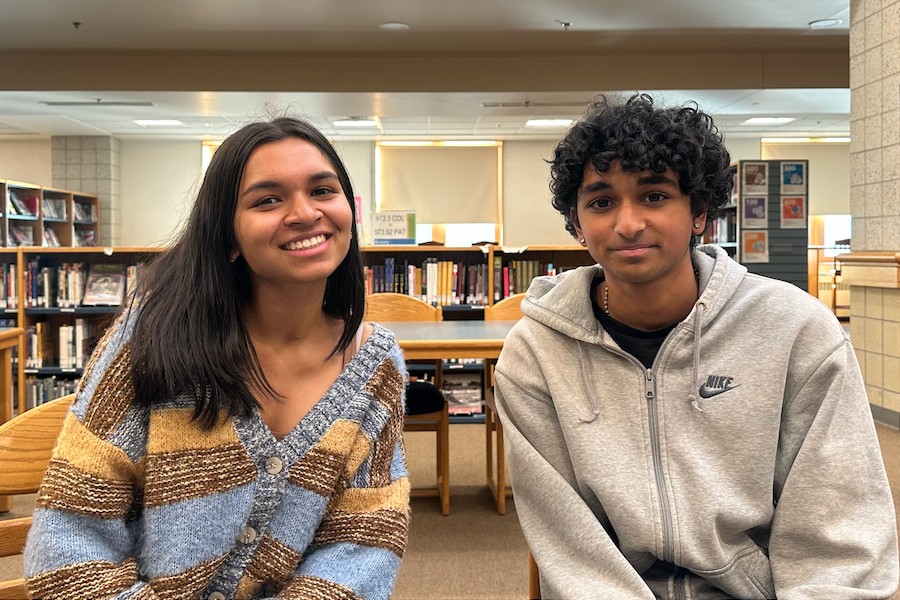
One of Westford Academy’s largest clubs, Distributive Education Clubs of America (DECA), is providing senior members with mentor positions this school year to assist in an easier transition from the class into the club for freshman members.
DECA is a national organization that aims to prepare students for fields that revolve around business such as finance, marketing, management, and more. At WA, students involved in the club participate in three yearly conventions that advance from district-wide to national level as competitors qualify further through rounds. These conventions involve competitions where participants will compete against students at WA and from other schools in their cluster by completing a test with 100 multiple-choice questions and a role-play where they must present a solution to a hypothetical issue.
Students are able to participate in DECA for the first time during their freshman year. According to senior DECA Co-President Sabah Chatiwala, it can be daunting to join DECA and immediately be faced with a slew of mock role-plays and new information. Senior DECA Co-Presidents Srisai Vuppuluri, Eesha Gowda, and Chatiwala, who were once in the same position as these freshmen, have developed a mentor system to attempt to smooth this transition.
The idea for DECA mentors was first developed by Vuppuluri. As he was reminiscing on his early DECA years, he remembered a time when he felt very overwhelmed. A senior took Vuppuluri under his wing and decided to assist him in preparing for his role-plays following the regularly scheduled after-school meetings.
“[This senior] was my go-to source for questions,” Vuppuluri said. “I realized many newer students likely did not have the same type of help so I wanted to connect them with an older mentor who could help them.”
Another component that went into this idea was the limited number of weekly club meetings. As DECA is one of the largest clubs at WA, it is nearly impossible to go through every aspect of every freshman’s mock role-plays. Furthermore, according to Chatiwala, club meetings are a large group setting where one-on-one feedback and connection can be difficult to foster.
The mentoring can be used not only to learn one’s way around a DECA role-play, but also as a way for freshmen to aim higher and see the potential their role-plays have.
[The program can] definitely be an inspiration [for the freshmen],” Chatiwala said. “[When I was a freshman], I had my sister and her boyfriend, and both of them sat with me for an hour and a half after my first role-play and told me everything I could improve on and how to approach my next role-play.”
From Vuppuluri, this idea was passed onto Chatiwala, as she is in charge of training DECA members for conventions. As the new school year commenced, Chatiwala turned this idea into a reality.
Chatiwala’s first step was to reach out to various DECA seniors to evaluate their interest level, followed by a Google Form asking how many hours they were willing to commit, their cluster, and what events they have participated in. She then sent a similar form out to freshman members, asking what they felt they needed the most mentoring on, and how much time they felt they needed to be mentored.
“[I was attracted to this] after noticing that a lot of the freshmen either don’t really know how to approach their role-plays, or that they felt nervous or like they were going to be judged while doing them,” senior DECA mentor Srikar Navuduri said. “It reminded me of myself in freshman year, so I wanted to take the opportunity to guide someone to make sure they don’t make the same mistakes I did.”
From here, Chatiwala was able to begin matching and connecting freshmen with their new mentors through a mentorship connection email, all based on the level of training and the time both parties wanted to put into it. After Chatiwala sends the email, it is up to the mentor and mentee to put together a time to meet and further introduce themselves.
Although the program is new and therefore has gotten off to a slow start, Chatiwala and her fellow DECA officers are excited to see how it can help foster connections and make the DECA freshmen feel more comfortable. Additionally, Chatiwala hopes that as it becomes more established, it can become a more organized system, as well as motivate more freshmen to apply for a mentor.
“I think right now the freshmen are a little shy and asking somebody to meet after school and work with them on something can be intimidating,” Chatiwala said. “Hopefully in the future after [the program] becomes more established DECA officers can help to set up meeting times to further motivate the freshmen.”
