

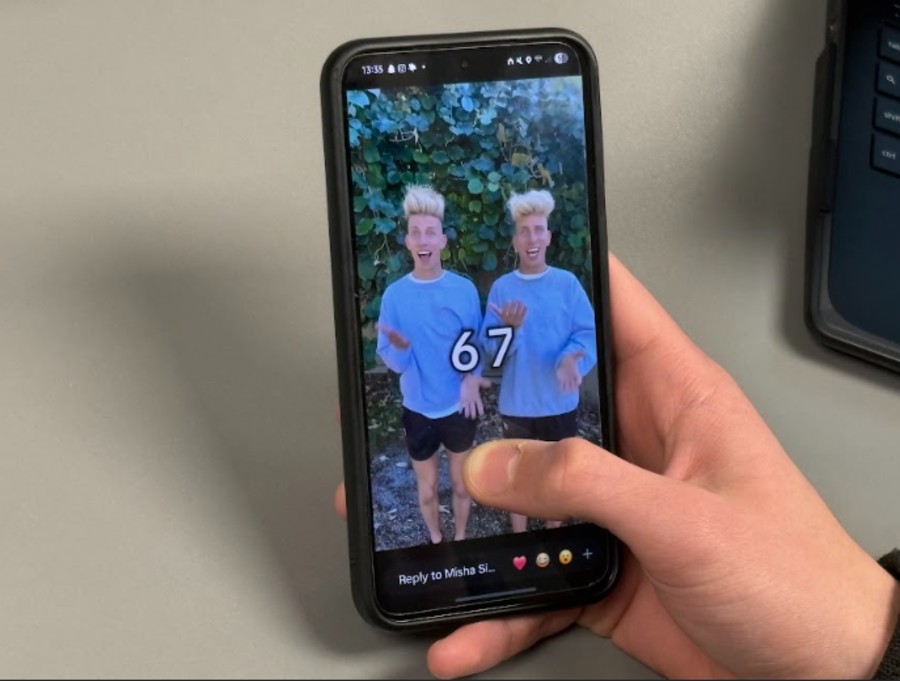
Throughout my middle and high school years, words such as “skibidi” and “67”, or phrases such as “I’m cooked” and “that’s rizz,” have been tossed around as a way to replace adjectives or slang with sillier terms. Originally a way to mimic a meme or an online trend, “brain rot” was mostly a joking way to describe a piece of media stuck in someone’s head. However, as people have started to use social media more and more, the concept of brain rot has shifted. What used to be an internet-wide meme has become a troubling topic that is raising concerns about the mental state of adolescents in this generation.
Increasing by a total of 230% between the years 2023 and 2024, brain rot was set on a path to be named the Oxford word of the year in 2024. While brain rot was a term that was first loosely used in the late 19th century by Henry David Thoreau in his book Walden, its most recent usage is directly connected to platforms such as Instagram and TikTok. On a deeper sense, brain rot touches upon the mental exhaustion and cognitive decrease experienced in teens or young adults because of their exposure to low-quality online productions created on social media platforms.
Nowadays, brain rot is everywhere and the majority of people who come across it are victims of doomscrolling which is the act of continuously scrolling online for long periods of time. According to The National Library of Medicine, studies found that cognitive and mental exhaustion are associated with negative behaviors such as doomscrolling, or in other words “zombie scrolling.” These patterns of being online for long periods of time impair one’s executive functioning, memory, planning, and decision making skills. The study highlights the connection between brain rot and one’s mental state by demonstrating how the design of it reshapes everyday patterns.
Not only does brain rot contribute to mental and cognitive fatigue, it also directly impacts an individual’s focus and attention span. With phones already being a highly addictive item, brain rot has added on to the temptation of scrolling Instagram and Tiktok. Brain rot’s comedic and entertaining aspects have become an attraction, causing most of an individual’s focus to be shifted to their devices. According to The Guardian, adolescents reported an increased difficulty in focusing on longer tasks such as reading, studying or even watching a movie without reaching for their phones and scrolling on social media platforms. While it might seem like a small issue, our brains have been rewired to think that our everyday responsibilities are harder than they actually are.
“When I’m doomscrolling, the majority of my videos have at least one aspect of brain rot, and some days I spend time procrastinating on TikTok before actually doing homework,” junior Nina Chawla said. “By the time I’m done doomscrolling, three math problems seem like so much work to me and I have no motivation to do them.”
Vocabulary and everyday conversations are also affected by brain rot, as it dominates people’s daily speech. As online slang takes over interpersonal interactions, vocabulary becomes less meaningful and more limited. According to the Educational Sociolinguistics, brain rot terminology represents a change in language forms and how they develop and spread. Some, if not many, young adolescents rely on catch phrases and inside jokes that only make sense within the context of social media. This can make real conversations with others who don’t understand these jokes feel shallow because people struggle to form ideas without depending on the same phrases.
“I thought [brain rot] was really funny at first but then I noticed it became a part of our language over time, and now it’s used in conversations constantly,” junior Lily Talbott said.
Due to its immense role in our community resulting from constant exposure, brain rot has managed to become a coping mechanism for stress and trauma, specifically when people are reflecting on something that took place in their life. One of my good friends was telling me about a heartbreaking event that happened in his life and, as a way to lift the mood and keep the people surrounding him from being sad, he started implementing different brain rot terms into his story. Instead of telling the story through one’s own personal emotions, many young people layer their story with memes and jokes to keep the conversation more lighthearted. While this can make trauma easier to share, it takes away the need for genuine healing.
Although there are many disadvantages that are involved with brain rot, it does create a sense of shared culture between younger generations, allowing them to bond with each other. At moments, brain rot can lighten the mood and relieve genuine stress. Sometimes watching a funny Instagram reel or a TikTok can uplift someone’s mood, and for many people who feel awkward in social situations, brain rot gives them something to talk about. In many cases, it can also bring together the digital community as people can laugh at or quote the same internet-wide memes. The advantages of brain rot don’t get rid of the problems it causes, but they do explain why many young people enjoy it.
Ultimately, brain rot is more than just a trend; it has become a way of life that has reshaped how young people think, speak, and act. While it provides humor and some sense of community amongst individuals, the costs of a shrinking attention span, smaller vocabulary, shallow conversations, and emotional resilience outweigh the pros. Knowing the extent to which brain rot exists is essential to stop its spread, and a few ways to go about this approach is being intentional about screen time. This doesn’t mean quitting social media altogether, however, setting small limits such as putting the phone away during meals, group hangouts, study sessions, or while you are watching a movie can be beneficial. Additionally, using the screen time setting or built in app timers would be effective in limiting your exposure to brain rot. Recognizing brain rot for what it is—low quality content used for entertainment—allows us to enjoy the overall humor of it without letting it dominate us.
